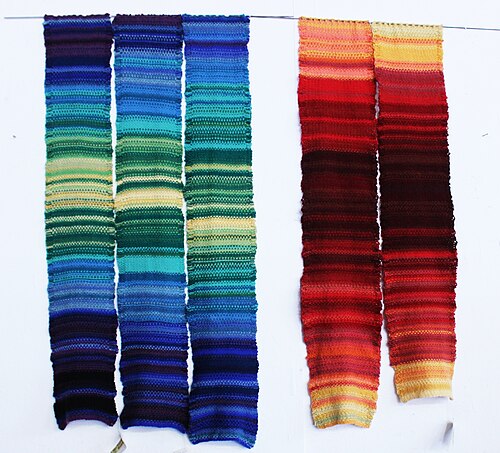
The Tempestry Project (see also the Wikipedia article), which started with a textile data visualization of 2016 temperature data from the Naval Air Station on Whidbey Island, Washington, popularized the idea of temperature blankets, the most widely-known form of data visualization with textiles. Emily McNeil, Marissa Connelly, and Justin Connelly started the project in 2017, responding to concerns about the first Trump Administration removing climate change data from government websites.
Each row shows the high and/or low temperature for a single day at that location; above, there are 3 years of data from Utqiagvik, Alaska from 1923, 2010, and 2016, as well as Death Valley in 1950 and 2016. The visualizations use color and chronological organization. Various artists from around the world have created these visualizations across numerous textile media.